 Conectamos talento, abrimos oportunidades.

The shortage of qualified labour is once again at the centre of the economic debate. The situation in the Murcian countryside, recently reported by a newspaper article, reflects the difficulties faced by certain companies in finding workers with the experience and skills necessary to maintain their productive activity.
Although the agricultural sector has specific needs related to seasonality, the characteristics of the work and the evolution of farms, many of the factors that condition the availability of professionals are also present in other areas of the economy.
The lack of generational renewal in certain occupations, the mismatch between available training and business needs, the difficulty in filling specific positions and the growing demand for technical profiles are some of the elements that can contribute to this situation.
A challenge that affects different sectors
The difficulties in finding professionals are not exclusive to the countryside. Activities such as hospitality and tourism, construction, industry, logistics or certain technical services may also experience problems in filling job positions that require specific qualifications, experience or skills.
In many cases, the challenge does not consist solely of having people looking for employment, but in connecting the concrete needs of companies with professionals who have the appropriate preparation and can join within the timeframes required by the activity.
This reality highlights the importance of anticipating hiring needs, identifying the most demanded profiles and developing mechanisms that allow for reducing the distance between the supply of workers and business demand.
Training, planning and access to talent
Faced with this scenario, it is essential to move towards models that integrate training with the real needs of the labour market. Specialised training, the updating of skills and collaboration between companies and training entities can contribute to improving the availability of prepared professionals. However, when hiring needs cannot be sufficiently covered through the talent available in the national market, it is also pertinent to explore other avenues of access to professionals.
In this context, international mobility can be part of the response, provided that it is planned, attending to the needs of each sector, the skills of the candidates and the applicable legal requirements. It is not a matter of replacing training policies or the development of local talent, but of expanding the possibilities of access to professionals and facilitating appropriate incorporation processes for both companies and workers.
Each sector presents its own characteristics. Therefore, solutions must be adapted to the required skills, the conditions of each position and the applicable regulations, avoiding generalist approaches that do not respond to the reality of companies.
Anticipating the needs of the labour market
The situation of the agricultural sector constitutes an example of a broader challenge: the need to improve the connection between companies, training and available talent.
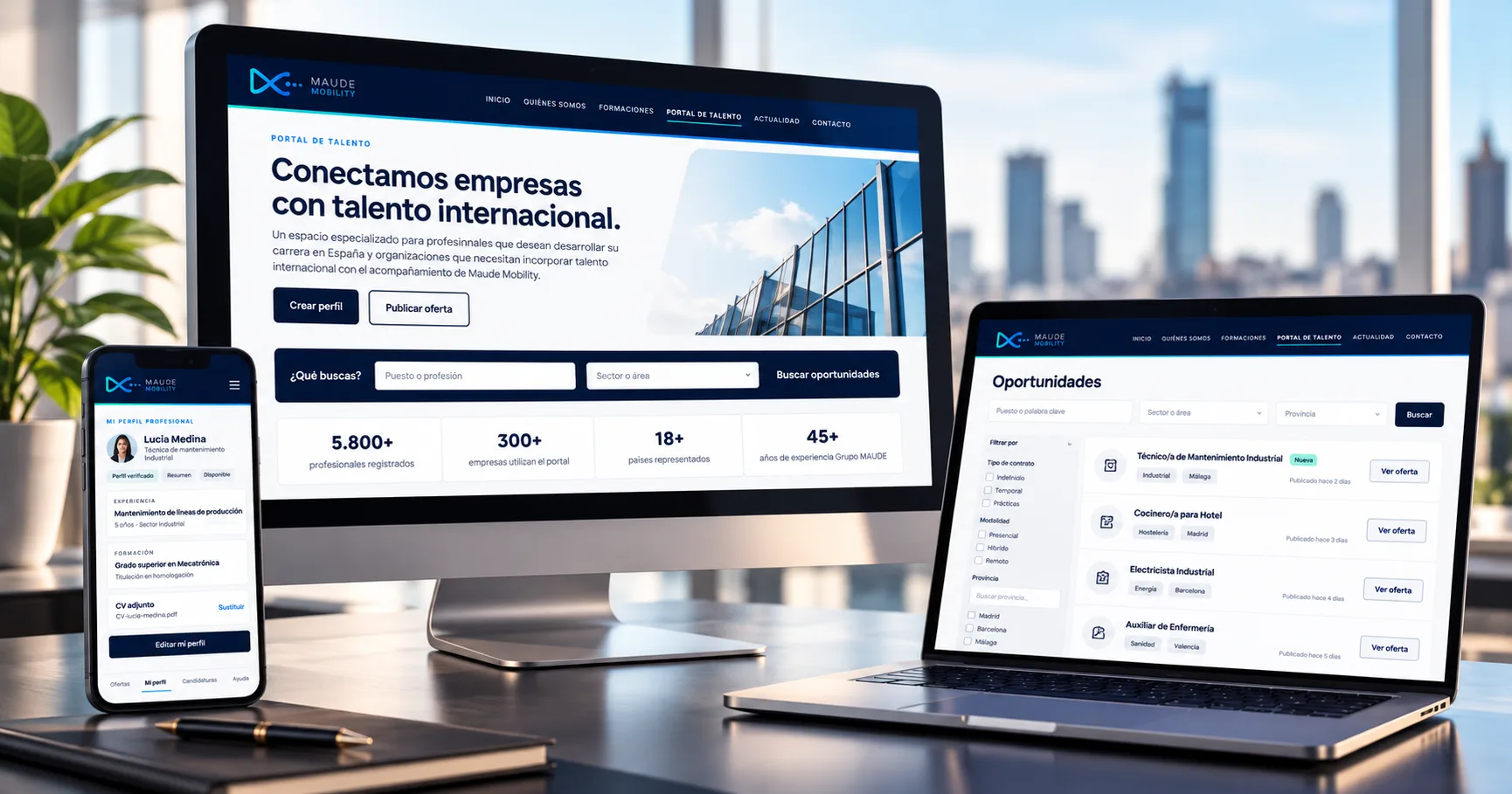
In an increasingly dynamic economic environment, organisations need to develop strategies that allow them to anticipate their personnel needs, access qualified professionals and favour sustainable long-term incorporations. At Maude Mobility we work to facilitate that connection, accompanying companies and professionals in international mobility processes and promoting solutions adapted to hiring, training and labour incorporation needs.