
 Conectamos talento, abrimos oportunidades.
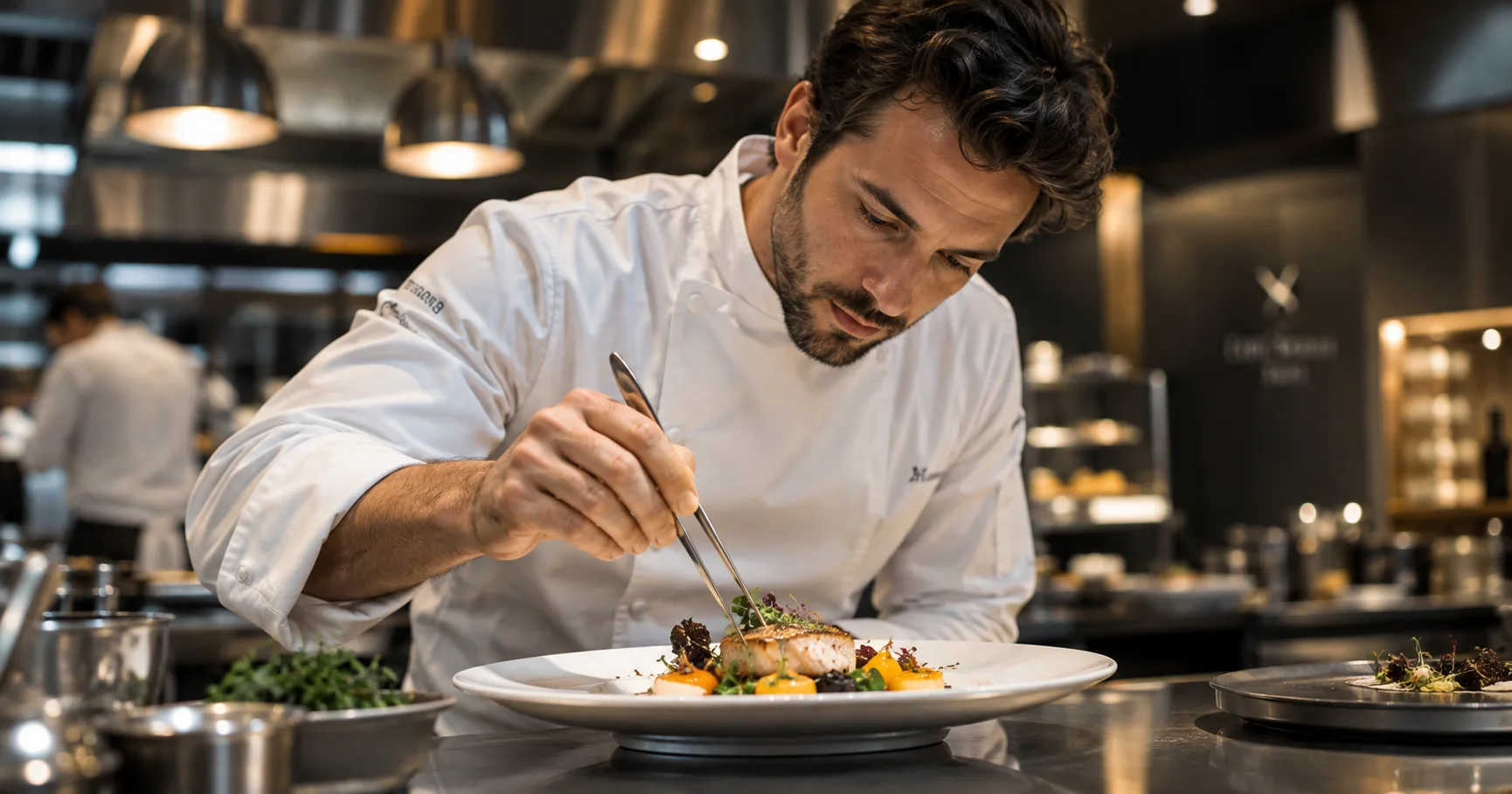
Cooking has become a profession with opportunities for qualified professionals and international talent.
Cities and destinations such as Málaga, Cádiz, Granada, the Balearic Islands and the Canary Islands concentrate significant tourist and hotel activity, with restaurants, hotels, resorts and international groups that need to incorporate cooking professionals throughout the year and, especially, during certain seasons.
For those seeking to develop an international career, Spain can offer more than just a job: training, professional experience and the possibility of building a career path within one of Europe's main tourist markets.
A sector that needs professionals
Data from the State Public Employment Service (SEPE) show the relevance of cooking-related professions within the Spanish labour market.
In 2025, 104,725 contracts were registered for foreign salaried cooks, while kitchen assistants reached 130,527 contracts. Salaried cooks are also among the occupations with the highest volume of hiring of foreign nationals in Spain.
The SEPE itself points out that the hiring of cooks is concentrated especially in activities related to food and beverage services and accommodation services, and highlights Madrid, Barcelona and the Balearic Islands among the provinces with the highest hiring. This reflects a reality: international talent is already part of professional cooking in Spain.
Málaga, Cádiz, Granada and the islands: destinations with strong hospitality activity
The opportunity is not concentrated solely in large cities. The weight of tourism makes certain territories particularly interesting destinations for those who want to develop their professional career in hospitality.
Málaga combines strong tourist activity with a wide range of hotel and gastronomic offerings. The province also has destinations such as Marbella, Torremolinos or Estepona, where the demand for cooking professionals is closely linked to tourism and the hotel industry.
Cádiz offers an important market associated with tourism, catering and hotel activity, especially during periods of peak tourist activity.
Granada, with a strong tourist and gastronomic component, represents another alternative for professionals and students looking to develop their career in Andalusia.
And the Balearic and Canary Islands constitute two of Spain's great tourist hubs, with a high presence of hotels, resorts and international groups.
In these destinations, there are also opportunities linked to international hospitality, which can be particularly attractive for professionals who want to acquire experience in multicultural environments and develop a career within large hotel groups.
How much can a cook earn in Spain?
Remuneration depends on factors such as experience, professional category, the applicable collective agreement, the type of establishment, working hours and the destination. As a reference, Indeed currently places the average base salary for a cook in Spain at around 1,744 euros per month, while in Málaga it reaches approximately 1,949 euros per month. In certain establishments, professional categories and tourist destinations, remuneration may be higher.
Therefore, rather than talking about a single salary, it is important to assess the professional profile, experience and type of establishment. A cook with specialised training, previous experience and the ability to work in high-level professional environments can access different opportunities than a profile starting their career.
Studying and acquiring professional experience
For many international students, one of the great advantages of training in Spain is that the project does not have to be limited to the classroom.
Immigration regulations generally allow certain study stay authorisations to be compatible with work activity of up to 30 hours per week, provided that it is compatible with studies. In the case of Vocational Training, the authorisation also automatically includes training activities in a company or equivalent organisation carried out within the framework of Vocational Training.
This allows training to be linked to real practical experience, something especially relevant in a profession like cooking. For an international student, the combination can be especially interesting: Training + practice + professional experience + employability.
Training, international mobility and employability
The demand for cooking professionals demonstrates that international mobility can play an important role in connecting available talent with the real needs of Spanish companies.
But it is not just about finding workers. It is about preparing professionals, identifying the right opportunities and accompanying a mobility process that makes sense from a training and professional point of view.
For an international student or professional, Spain can represent an opportunity to:
Train in a sector with demand.
Acquire practical experience.
Work while developing their studies, when their authorisation allows it.
Access opportunities in hotels, restaurants and international groups.
Improve their professional skills and languages.
Build a professional career in Spain or project it later towards other markets.
A profession that can become an international career
Cooking is much more than a job position. It is a profession in which the experience, training and skills acquired can open doors in different destinations and markets. Málaga, Cádiz, Granada, the Balearic Islands or the Canary Islands can be the starting point.
The goal can be much broader: to turn training into experience, experience into employability and a mobility opportunity into a true international professional career.
At Maude Mobility we work on that connection between training, international talent and the real needs of the Spanish labour market, accompanying professionals and students in processes that seek to generate sustainable opportunities for both people and companies.