 Conectamos talento, abrimos oportunidades.

The Spanish construction industry is facing a challenge that transcends the availability of workers in the short term. Generational renewal, the preparation of new professionals and the capacity of companies to fill specialised positions are part of an issue that directly affects the development of projects and the productive capacity of the sector.
A sector that is growing, but cannot meet its needs
The data collected by ABC illustrate the contradiction that the construction industry is going through. In August 2026, the sector reached approximately 1.48 million affiliates, after adding more than 90,000 workers in one year. However, this employment growth coexists with a drop in the pace of project execution: construction production fell by 9.8% year-on-year in July, while building construction recorded an even greater drop.
The National Construction Confederation estimates that the sector would need around 700,000 new workers to achieve its objectives. The scale of the challenge is accentuated by the ageing of the workforce. According to data from the Observatory of the Construction Labour Foundation cited by ABC, the proportion of building professionals over 50 years of age went from 13.4% in 2015 to 22% in 2025. Meanwhile, the weight of those under 30 barely experienced significant changes.
This combination of productive needs and lack of generational replacement affects the ability of companies to develop new projects, at a time when Spain maintains a housing deficit that the Bank of Spain has estimated at approximately 750,000 properties. The availability of qualified professionals thus becomes a relevant variable for the sector's response capacity.
Training as part of the business solution
Faced with this scenario, the recruitment of international workers can be part of a broader strategy, provided it is accompanied by professional preparation, recognition of competencies and adequate planning of the needs of each project. The incorporation of professionals does not by itself solve the lack of specialised profiles: it is also necessary to determine what capabilities each position requires and how they can be developed.
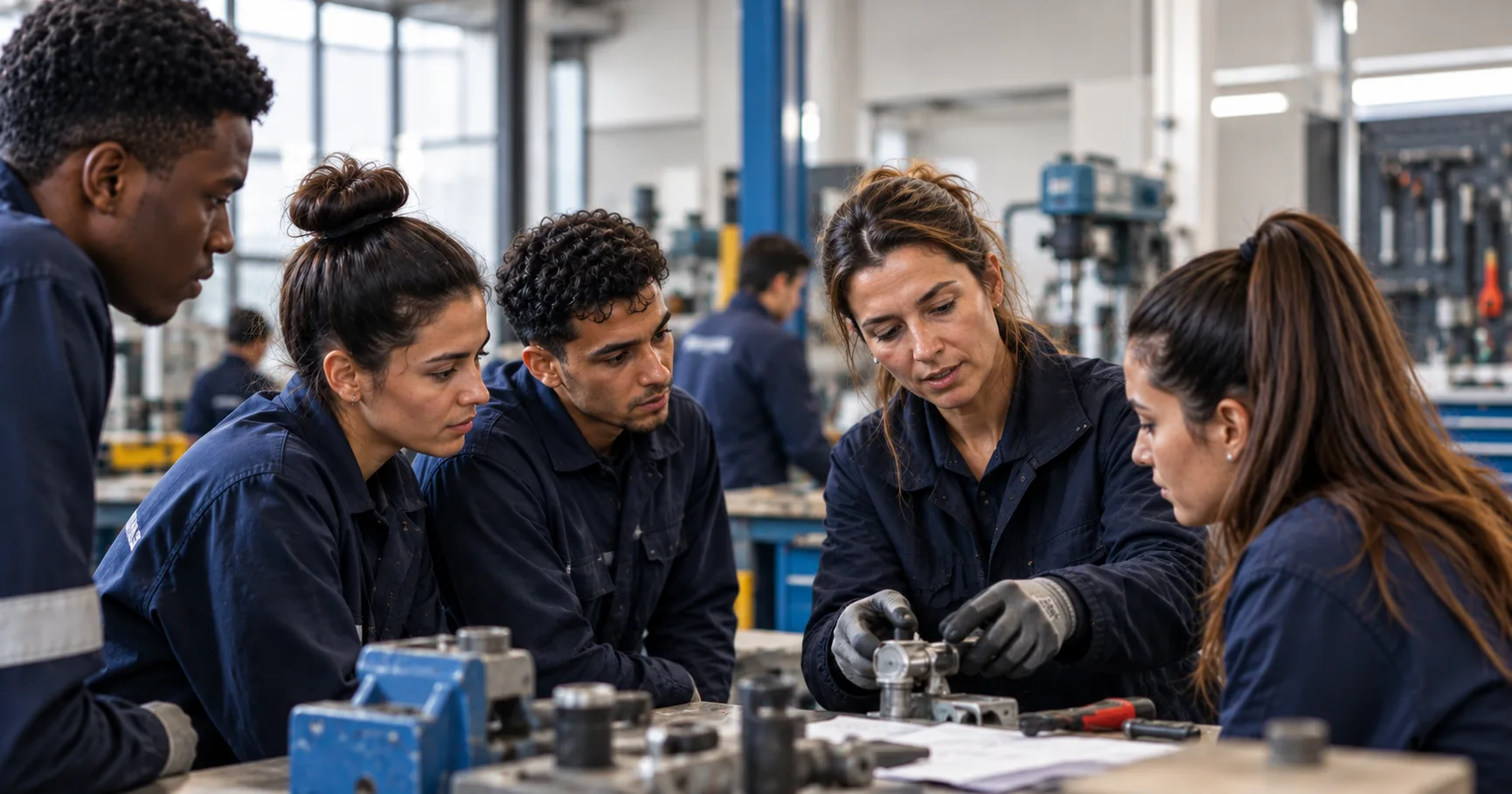
At Maude Mobility we understand that the response to hiring needs must begin with a precise understanding of the project. Therefore, our approach of Training Adapted to Project Needs seeks to connect the needs of companies with training itineraries designed for their specific requirements.
The proposal allows for the planning of projects that link professional training with the concrete needs of sectors and organisations, attending to the characteristics of the positions, the profiles of the participants and the objectives of incorporation. Training can constitute an element of prior preparation within a broader process of international mobility and professional development.
The issue is not only to attract people from other countries, but to build mechanisms that allow for identifying profiles, preparing their competencies and connecting them with real job opportunities, respecting the applicable legal and professional requirements.
Building the future also requires training those who will make it possible
The situation of the construction industry poses a reflection for companies: How to respond to a growing demand for professionals when generational replacement does not advance at the same pace as the needs of the sector?
Tailored training, profile planning and international mobility can be integrated into business solutions that address these needs from a medium and long-term perspective. At Maude Mobility we work to connect training, companies and international mobility through projects designed according to the needs of each organisation.
Are you a construction worker and want to develop a career in Spain? Or does your company need to incorporate professionals for a construction project? Are you looking to develop a training itinerary adapted to your hiring needs?
Let us talk about your business or professional project.
info@maudemobility.com
Source: